












Who Will Replace Gavin Newsom? Your Unbiased Guide to the Two Candidates Who Could Shape California’s Future
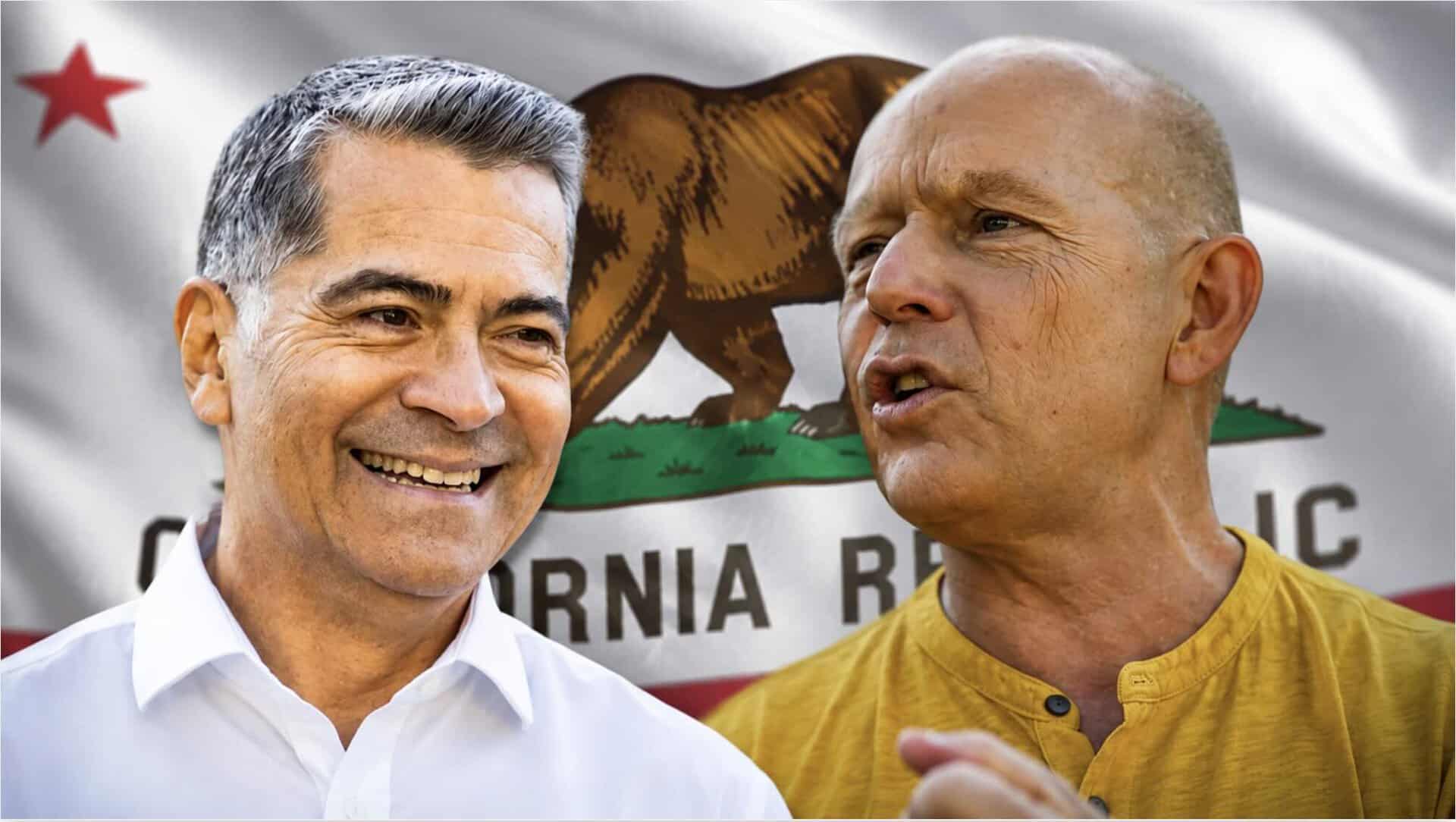
The 2026 California Primary Election surprised many in more ways than one. For the first time in decades, California voters delivered one of the most competitive statewide primary results, eventually leading to a showdown between Democrat Xavier Becerra and Republican Steve Hilton. One of these two candidates will become California’s next governor, and here’s an unbiased look at who they are, where they stand on the issues, and what their competing visions could mean for California’s future.
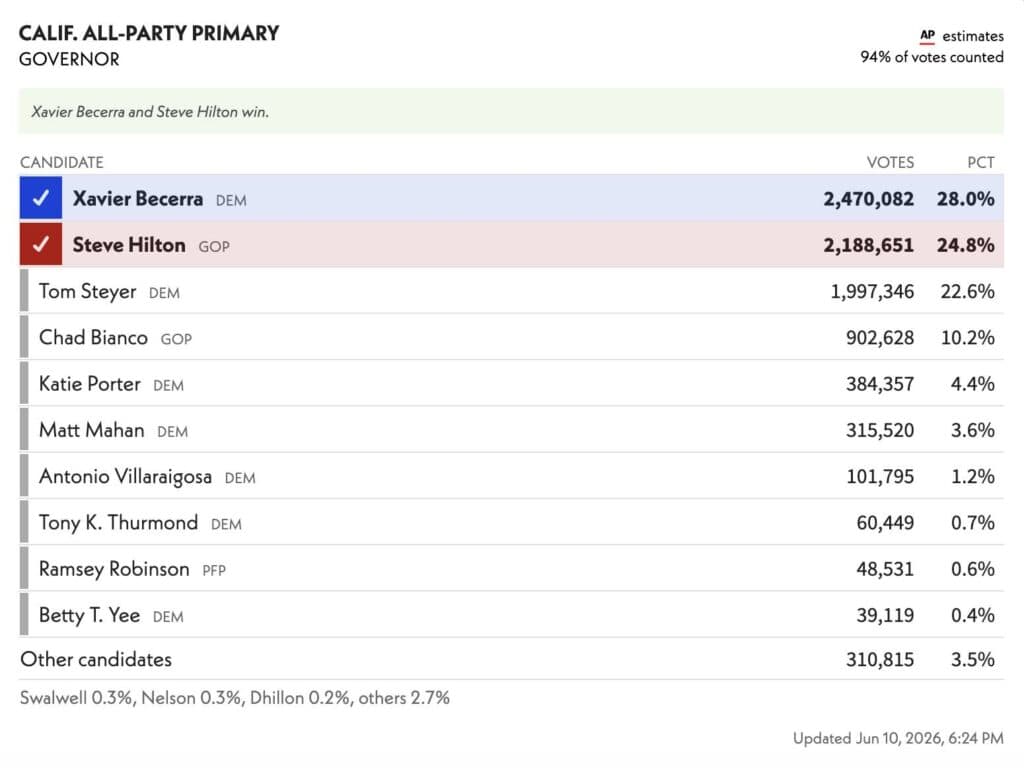
After over a week of ballot counting, Becerra finished first with 28% of the vote, while Hilton secured second place at about 25%, defeating billionaire Democrat Tom Steyer, who spent more than $213 million on his campaign, becoming the largest self-funded gubernatorial primary campaign in California history — but still failed to reach the runoff.
The next California governor will be determined in the November general election, succeeding term-limited Governor Gavin Newsom, who has faced multiple recall efforts since taking office in 2019, including one that qualified for the ballot. Some of the core state issues the new governor will have to deal with include rapidly declining housing affordability, skyrocketing gas prices and general costs, homelessness, public safety concerns, water and wildfire management, and immigration.
Becerra and Hilton are planning to tackle these issues with quite different approaches, and here’s our quick, unbiased guide.
Taxes
Hilton: Proposes 0% California income tax on the first $100,000 of income, and income above $100,000 taxed at a flat 7.5% rate, arguing that this would simplify the tax code and make California more competitive. Additionally, Hilton proposes capping California vehicle registration fees at $71 annually by eliminating the state’s value-based Vehicle License Fee, Transportation Improvement Fee, and most other registration-related surcharges.
Becerra: Supports California’s existing tax structure and has not proposed any specific income tax cuts.
Gas Prices
Hilton: Has publicly stated a goal of reducing gasoline prices and rolling back regulations he believes contribute to California’s high energy costs. Announced his plan for $3 gas.
Becerra: Supports California’s existing climate and clean-energy direction while pursuing affordability measures elsewhere.
Housing Affordability
Hilton: Aims to reduce environmental, zoning, and permitting barriers; accelerate approvals; reduce regulatory costs that he argues add tens of thousands of dollars to new homes.
Becerra: Plans to increase housing production statewide; reform zoning and permitting laws; facilitate first-time homeownership; hold local governments accountable for meeting housing goals. No specific statewide unit target has been released yet.
Public Safety
Hilton: Aims for stronger enforcement, increased consequences for criminals, and reversing what he describes as lenient criminal-justice policies.
Becerra: Emphasizes crime prevention, intervention programs, and community-based public safety initiatives rather than increasing penalties for lower-level offenses.
Homelessness
Hilton: Focuses on accountability, treatment, and public-order enforcement; criticizes existing homelessness spending as ineffective.
Becerra: Expands on emergency shelters and permanent housing. Ties state funding to measurable outcomes, such as people moved off the streets into housing and services. Communities producing results receive funding; those that do not face penalties.
Healthcare
Hilton: Supports a more market-oriented approach and shares skepticism toward expanding government healthcare programs.
Becerra: Makes healthcare a signature issue. Wants California to serve as a “firewall” against federal healthcare cuts, protect Medi-Cal, lower prescription drug costs, and move toward broader coverage. Has long supported the principle of universal healthcare.
Government Spending
Hilton: Proposes reducing state spending to roughly pre-pandemic levels and shrinking government bureaucracy.
Becerra: Generally supports maintaining state investments in healthcare, housing, education, and social programs while improving efficiency.
Immigration
Hilton: Supports stronger border security and greater cooperation with federal immigration enforcement while maintaining legal immigration pathways.
Becerra: Strongly supports California’s immigrant protections and has highlighted his record defending immigrants as Attorney General.
Interesting Facts Most Voters Don’t Know
The two leading candidates also differ substantially in their backgrounds, both in their public careers and in their private lives.
Hilton is a British-born immigrant, media personality, former adviser to the UK Prime Minister David Cameron, and political outsider campaigning to dramatically reduce taxes and shrink California government. He was born in London and reportedly raised by a single mother. Hilton frequently describes himself as “an immigrant who achieved the California Dream.” Before entering the race, he hosted a national show on Fox News. Hilton became a U.S. citizen only five years before this election, in 2021, making him one of the most unusual major-party gubernatorial nominees in California — and national — history.
Becerra is a longtime public official who has served in both California and the federal government, including as a member of Congress and California Attorney General. Under former President Joe Biden, Becerra served as the US Secretary of Health and Human Services through the COVID-19 pandemic, from March 2021 through January 2025. Notably, he started the race polling near the bottom of the Democratic field before surging into the first place.
If Becerra wins, he would become the first Latino California governor since the 19th century. If Hilton wins, he would become the first foreign-born California governor in modern state history and the first Republican governor since Arnold Schwarzenegger left office in January 2011.
As of today, the California primary election has not been officially certified yet. While the gubernatorial runoff is effectively decided by the number of votes already processed (over 94% of the ballots counted so far), the results will not become official for another month. While counties must complete their official canvass and submit final results by July 2, 2026, the California Secretary of State must officially certify the statewide results by July 10, 2026.
The 2026 California General Election will take place on November 3, when California voters will decide on the next chapter for the biggest US state by economy and population.
Now it’s your turn! Who do you think should be California’s next governor — and why? What issues will decide your vote this November — taxes, gas prices, housing, crime, healthcare, immigration, or something else? Join the conversation by signing up for a free account and posting directly to our LiveFEED!
If you value independent, public-focused journalism, subscribe to our YouTube channel and become a Member to help us continue covering the stories that matter.


About The Author